The Four Worlds of EduBert — Addition, Subtraction, Multiplication and Division in One Game
Meet EduBert's four worlds: addition, subtraction, multiplication and division in one game. All available now, first level of each free to play.

Picture your child working out how much change is left after their big brother took three coins from the jar — and doing it in their head, at the kitchen table, without a single worksheet. That everyday moment is exactly what EduBert was built for: four worlds of maths where a child practises addition, subtraction, multiplication and division — each operation in its own engaging adventure, with its own story and characters.
In short: EduBert has four adventures — Park (addition), City (subtraction), Beach (multiplication) and Forest (division) — plus a Training Meadow where your child drills any operation without a storyline. All of them are available right now, and the first level of every world is free, so you can quietly check whether this format suits your child. Below I walk through what each world teaches, how it teaches it, and which one to start with.
Four operations, four worlds — how it works
Early maths runs on a simple rule: a child needs to see and touch something before the symbol means anything. The path runs from the concrete (real objects), through a picture (groups, rows, a number line), to notation like 3 + 4 = 7. This isn't theory for theory's sake — it's the sequence early mathematics education is built on, the national curriculum included. A well-designed game lives on that picture stage: it shows the operation before it asks for the answer.
Take a simple 2 + 3. To an adult it's obvious; to a six-year-old the digit 2 is an empty squiggle until it's tied to two real things. So the good path looks like this: first two blocks beside three blocks (concrete), then two circles and three circles on a picture (pictorial), and only at the end the notation 2 + 3 = 5 (abstract). EduBert bakes that same order into every level — a child first sees groups, rows or jumps on a line, and the symbol turns up once there's something to hang it on. That's why the tasks don't "teach differently" from you at home — they simply give a child room to repeat on their own.
Each of the four worlds is ten levels of gently rising difficulty, its own story and a cast of five characters who guide the child through the tasks. Numbers and problems grow step by step, so a five-year-old starts with something within reach while an older child still has somewhere to climb. The thing that's hard to keep up at the table — lots of repetition in the right difficulty band, plus instant, kind feedback — the game provides on its own, with no marking and no sighing.
Why a game at all? Because good play does two things for number work at once: it keeps a child wanting to repeat (and repetition builds fluency) and it lowers the fear of error. A child who wants to beat the next level practises subtraction ten times over without noticing they're "studying". There's another benefit that's hard to reproduce at the table: one game grows with the child. The same world meets a five-year-old on the easiest problems and gives a seven-year-old something worth reaching for — nobody feels it's "too easy" or "too hard".
Park — addition (+)
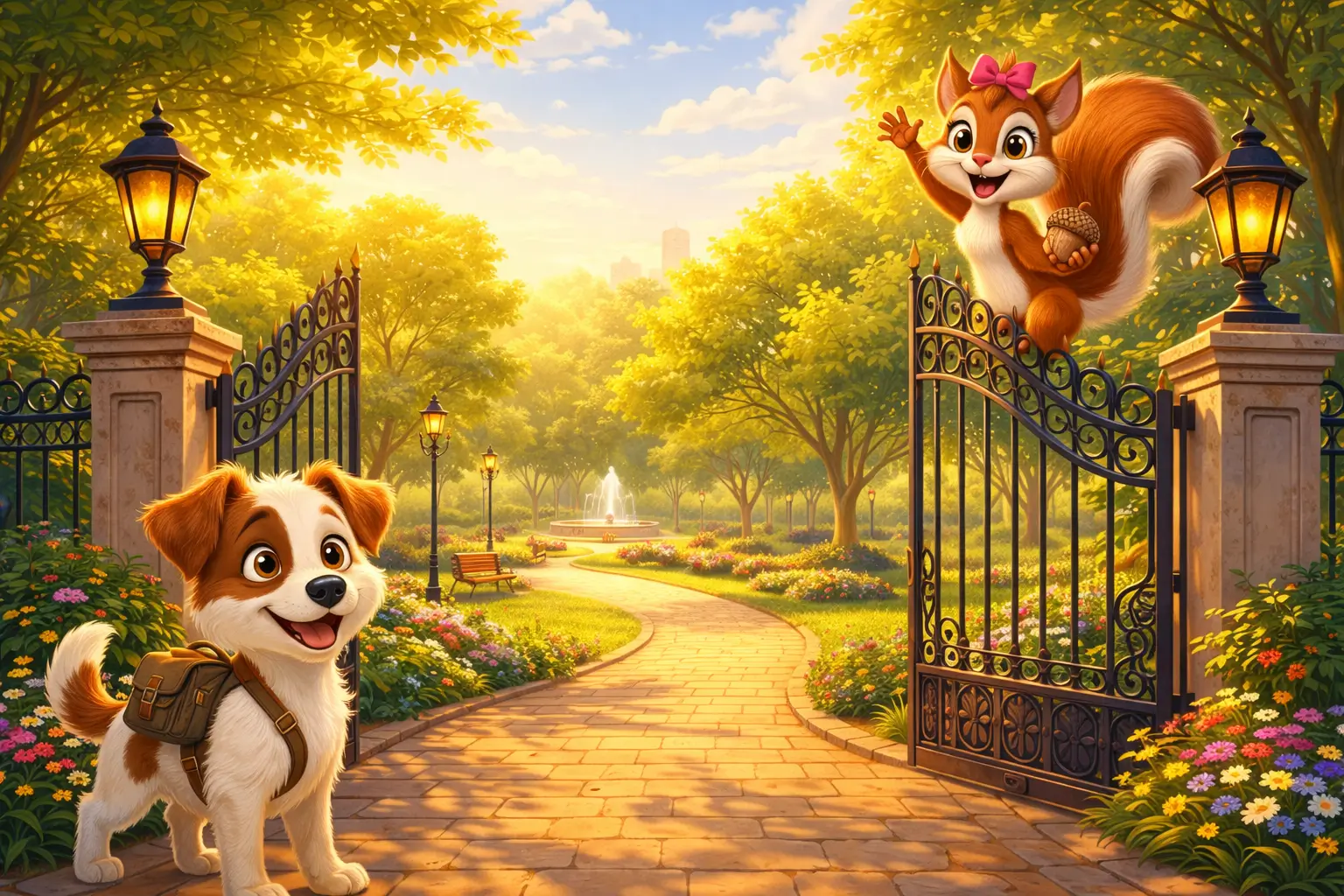
Park is where it all begins. Calm paths, benches and trees, and among them five characters: Gardener Henry, Squirrel Suzie, Goose Greta, Hedgehog Jeremy and Magpie Stephanie. The story carries a child from the park gate all the way home — with a lost puppy to look after along the way.
Mathematically, Park teaches addition as joining: two groups come together into one bigger group. A child sees three acorns and two acorns, then counts how many there are altogether. On one of the first levels it looks like this: three ducks sit by the pond, two more paddle up — and the child works out there are five before ever seeing 3 + 2 = 5. Later come smarter moves — counting on from the larger number and making ten — the very tricks adults use in their heads. If you want to practise addition away from the screen too, we break it right down in How to teach your child addition, and Park is the natural starting point — the first level is free.
City — subtraction (−)
Once addition is solid, EduBert heads into a bustling City — and this is where subtraction comes in. Streets, shops, trams and stops offer endless natural prompts: how much change after shopping? how many stops until home? how many people got off the bus? A simple example from this world: eight passengers got on the tram, three got off at the stop — how many ride on? A child grasps that instantly, because they know it from life. Through the city's tasks they're guided by Postman Frank, Grandma Sophie, Officer Ann, Radzio the Raccoon and Gustav the Pigeon.
Subtraction is harder than addition because it wears two faces. Sometimes it's taking away ("you had eight, take away three"), sometimes it's difference ("how many more does Ann have than Bo"). Good tasks show both, and pay special attention to crossing the tens boundary — the point where 12 − 5 no longer fits on your fingers. City has a gentler difficulty curve at the start and more practice at those tricky moments. If you'd like to tackle subtraction at home as well, see How to teach your child subtraction. The first level of City is, as everywhere, free.
Beach — multiplication (×)
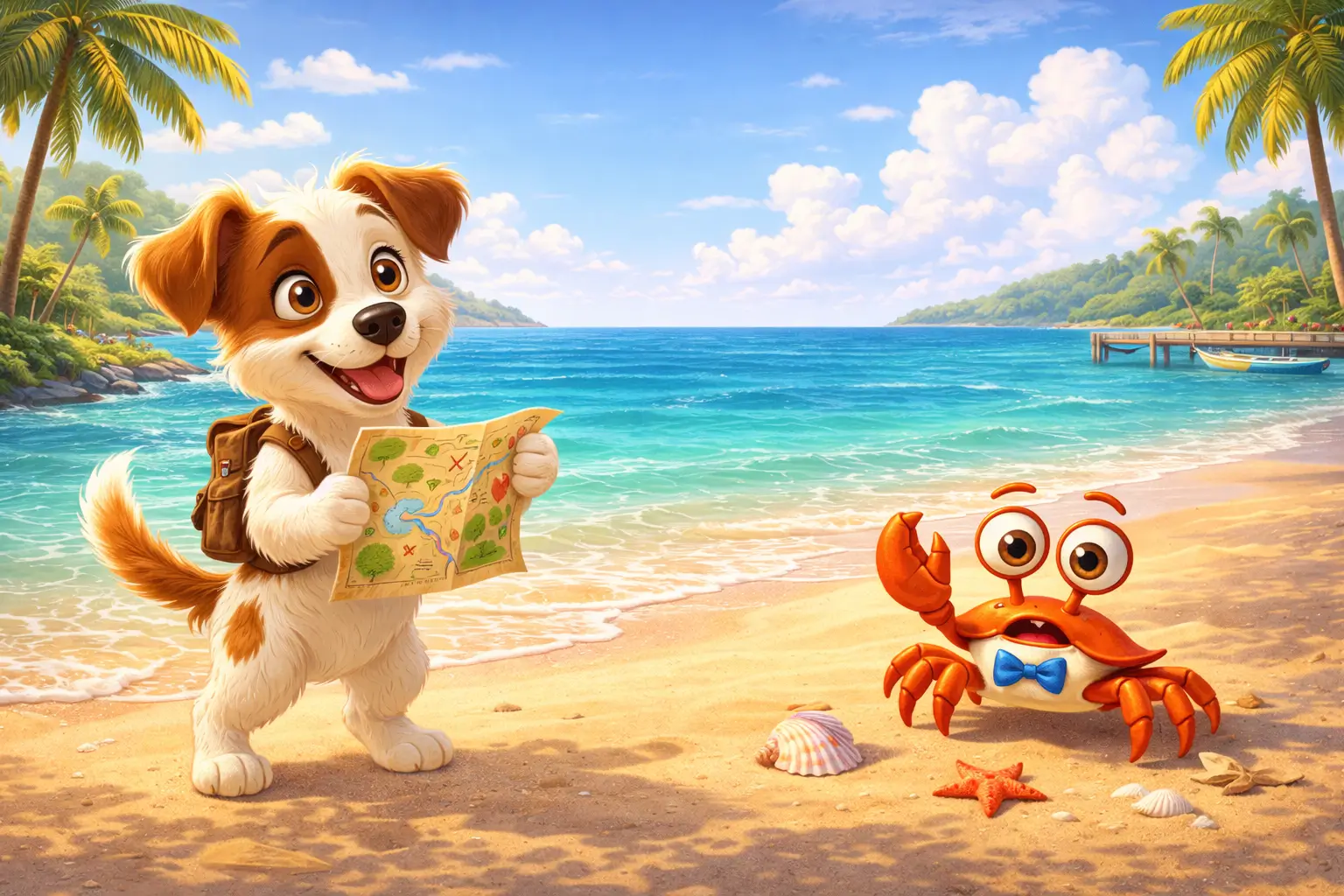
Sun, sand and times tables. Beach is the world where a child meets multiplication — and it does it in the healthiest possible way: through equal groups. Three towels with four shells each. Five parasols, two loungers under each. Before the abstract 3 × 4 appears, the child sees "three groups of four" and counts the whole. Later comes the array picture (rows upon rows), which reveals one of a mathematician's first "superpowers": 3 × 4 and 4 × 3 are the same rectangle, just turned. Showing you around the beach are Pete the Pelican, Clem the Crab, Felicity the Seal, Basia the Turtle and Maya the Seagull.
This is an important world, because the times tables are a milestone of primary maths — the national curriculum expects them mastered by the end of Year 3. Beach helps a child get there through play, one group at a time, instead of memorising in a vacuum — and we map the same journey at home in our guide on how to teach multiplication. Parents looking specifically for a multiplication table game will find exactly that — the first level of Beach is free.
Forest — division (÷)
Forest is the most mysterious of the four worlds and usually the last on the route, because division is the hardest of the basic operations. EduBert has to divide to find the way: share out supplies equally, split the journey into stages, fairly hand out finds. Along for the trip are Ranger Boris, Fred the Fox, Mama Bear Ola, Celina the Owl and Derek the Woodpecker.
We teach division from the side closest to a child's intuition — from sharing equally: "we have twelve pine cones and three baskets, how many go in each?". It's the same move children know from sharing sweets, so the meaning arrives before the ÷ symbol. Only later comes the second view ("how many groups of four fit into twelve?") and the discovery that division is the reverse of multiplication — the bridge that links Forest to Beach. We walk the home version of that road step by step in our guide on how to teach division. As always, the first level of Forest is free, so a child can try division with nothing at stake.
The Training Meadow — practice without a story
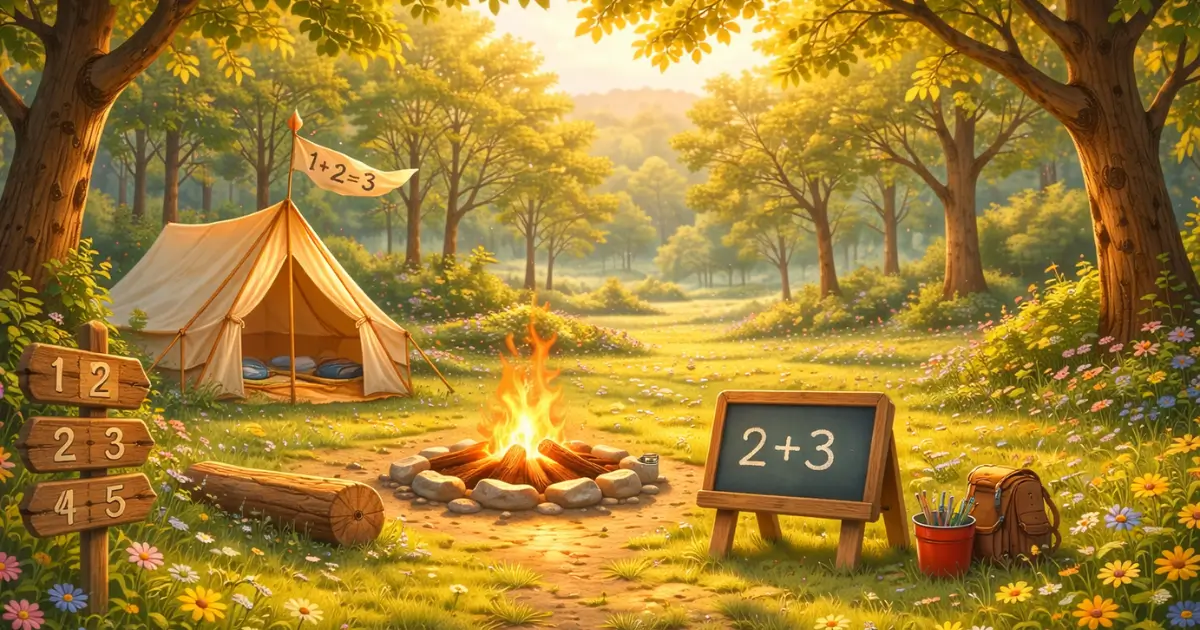
Sometimes a child doesn't want a story just now — they simply want to practise the one thing that isn't clicking. That's what the Training Meadow is for: a place to pick any operation (addition, subtraction, multiplication or division) and drill it in short, focused bursts, with no plot and no characters. It's a great complement to the four worlds — right before a times-tables quiz, say, or when subtraction across the tens boundary still needs a few more reps. The first level of every operation on the Meadow is free.
Which world to choose for your child
You don't have to pick the "best" world — just start with the one that matches your child's stage. Here's a simple, step-by-step way:
- Check where they are now. If your child is still getting comfortable with numbers and joining groups, begin with Park (addition). It's the foundation everything else stands on.
- Follow the order of operations. Once addition is secure, the natural next step is City (subtraction) — the "other side of the same coin". Then Beach (multiplication), and last Forest (division).
- Don't skip stages. Multiplication and division only make sense once addition and subtraction feel easy. If your child looks lost, step back one world, no pressure.
- Start with the free first level. In every world the first level is free — treat it as a trial. See which one your child wants to stay with longer.
- Use the Meadow to polish. When one specific operation is wobbling, a few short bursts on the Meadow do more than one long session.
Above all: short, often, and no racing. Five minutes a day on one world will do more than an hour once a week.
Blending the game with maths at home
The best results come not from the game alone and not from blocks alone, but from both, complementing each other. A few ideas that really work:
- Start from life, not the screen. "We have three apples, we'll buy two more — how many in the basket?" is a full addition exercise in its own right. EduBert then adds the repetition you don't always have five spare minutes for.
- Praise the method, not just the answer. Instead of "well done!", try "I saw you counted on from the bigger number — clever!". A child remembers that thinking is what counts.
- Treat a mistake as a curiosity. In the game a slip doesn't end the fun — do the same at home: check it together on fingers, no drama.
- Let your child lead sometimes. If today they'd rather do Beach than City, that's fine. Engagement matters more than perfect order.
A game won't replace counting apples together — but it complements it beautifully, especially on the days when "sit with me and do some maths" simply isn't going to happen.
Common mistakes worth avoiding
Parents who mean well sometimes make learning harder without realising. Here are the traps that show up most often across the four operations:
- Rushing to multiplication and division. Beach and Forest are tempting because they feel like "real maths". But multiplication only makes sense once addition is comfortable, and division once a child understands multiplication. A skipped stage returns later as a gap.
- Time pressure. Timed drilling usually blocks a young child's thinking rather than speeding it up. Speed arrives on its own once confidence does.
- Swapping the concrete for a screen. The game is a great supplement, not a replacement for counting real blocks and apples. Both together work best.
- Correcting in a split second. When a child slips, the instinct is to supply the right answer at once. But catching the error themselves is what builds understanding.
- Sessions that run too long. An hour-long "lesson" for a six-year-old is a fast track to reluctance. Short and often beats long and rare.
None of these is a disaster — just knowing about them is enough to avoid them.
What's free and what's Premium
We want the barrier to entry to be zero, so the free version lets a child play the first level of each of the four worlds and the first level of every operation on the Meadow, on one child profile. That's enough to try all four operations before you decide anything.
Premium opens all levels (1–10) in every world and on the Meadow, adds progress statistics (you can see what's going well and what's worth another look) and lets you run up to five child profiles — handy when there's more than one little mathematician at home. You'll find the plan details on the pricing page; here it's enough to know that you start for free and without a card.
Frequently asked questions
Are all four worlds available now? Yes. Park (addition), City (subtraction), Beach (multiplication) and Forest (division) are all available, as is the Training Meadow. In each of them the first level is free.
Which world should we start with? The operation your child is currently learning. For most children that's addition, so Park. The order Park → City → Beach → Forest matches the natural order in which operations are learned.
Can a five-year-old handle multiplication and division? Levels rise gradually, so the youngest children start with the simplest problems. But multiplication and division only make sense once addition and subtraction are secure — if your child is just starting out, happily stay with Park and City.
How is the Meadow different from the four worlds? The worlds have a story, characters and lead a child through a plot. The Meadow is pure practice of a chosen operation — no story, but available on demand. Great for short refreshers.
How much is full access? The first level of every world and every operation is free, no card. Current prices and Premium plans are on the pricing page.
Four operations don't have to be four sources of stress at the table. They can be four worlds a child wants to come back to on their own. The first level of each is free — take a look together and see which one becomes your family's favourite.
Sources
- National Research Council, "Adding It Up: Helping Children Learn Mathematics", National Academies Press — https://www.nationalacademies.org/read/9822/chapter/6 — the five strands of mathematical proficiency, including conceptual understanding and procedural fluency.
- National Council of Teachers of Mathematics (NCTM), "Procedural Fluency in Mathematics" (position statement) — https://www.nctm.org/Standards-and-Positions/Position-Statements/Procedural-Fluency-in-Mathematics/ — fluency should be built on conceptual understanding and reasoning strategies, not rote memorisation.
- NRICH, University of Cambridge, "Learning Mathematics Through Games Series: 1. Why Games?" — https://nrich.maths.org/2489 — how games support motivation, meaningful practice and reduced fear of error.
- National Association for the Education of Young Children (NAEYC), "The Beauty of Early Childhood Mathematics: Playful Math = Engaged Learning" — https://www.naeyc.org/resources/pubs/yc/jul2017/playful-math-early-learning — the case for playful, engaging mathematics in the early years.

Written by the EduBert team
We create educational games that combine play with learning math.
Read also

Meet the Park Characters — Gardener Henry, Squirrel Suzie, Goose Greta, Hedgehog Jeremy and Magpie Stephanie
Every character in EduBert has a personality and a role. Meet the heroes who accompany your child while learning addition in the Park Adventure.
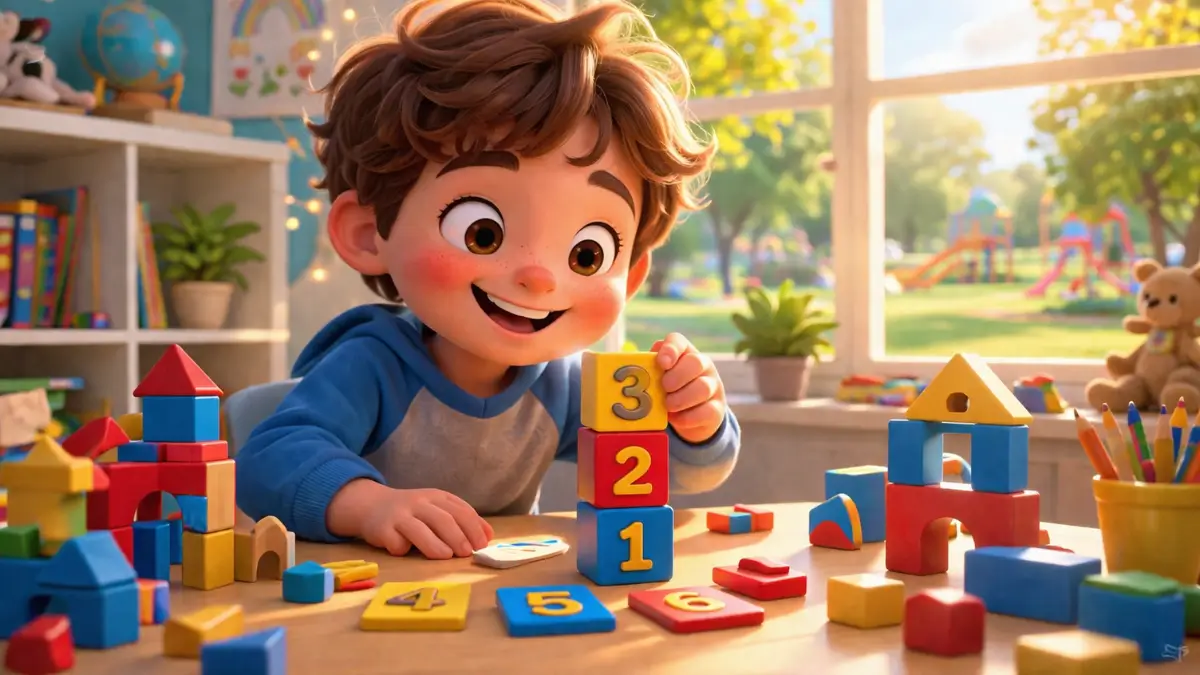
How to Teach Your Child Addition — Calmly and Without Tears
Teach your child addition step by step: from blocks to mental math, three strategies that make the difference, and how to practice without pressure or tears.
Elementary Math Curriculum (Grades 1–3) — What Your Child Needs to Know
What your child must know in math after grades 1, 2 and 3 under the Common Core — a clear year-by-year overview and how to support them at home.

Try EduBert together
Create a free account and let your child explore — the first level of every adventure is free.
Create free account →No card required — 4 adventures and the Training Meadow