Addition to 20 — When Is Your Child Ready?
Addition to 20 with crossing the tens threshold. How to recognize your child's readiness and which methods help.
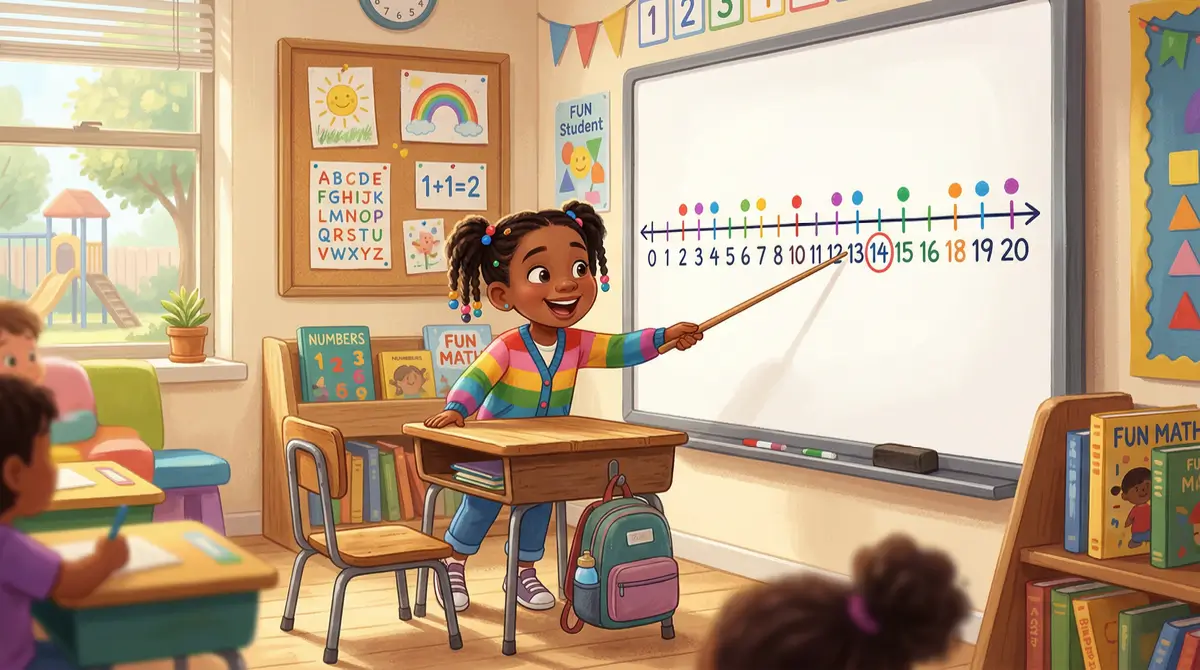
Addition to 20 is a turning point in math learning. This is where "crossing the tens threshold" appears — a moment that challenges many children. 8 + 5 = 13. Where does that "1" at the front come from?
When Is Your Child Ready?
Readiness for addition to 20 depends not on age but on mastering addition to 10. Your child is ready when they answer questions in the range to 10 quickly and confidently (without counting on fingers every time), understand that 10 is a "full ten," and can count from any number up to 20.
If your child still counts on fingers for 6+3 — go back to addition to 10 exercises. There's no rush.
The Problem: The Tens Threshold
8 + 5 = ? This problem requires decomposition: 8 + 2 = 10, leaving 3, so 10 + 3 = 13. The child must perform three operations in their head. That's a big cognitive leap.
The most effective method is "making ten." You teach your child that 8 needs 2 more to reach ten. Then add what's left. Over time, this becomes automatic.
Method 1: The Egg Box for 10
Take a 10-egg carton (or draw a 2x5 grid). Put in 8 balls (or blocks). "How many more to make 10?" — 2. "We have 5 more balls. Put 2 in the box — box is full! 3 left over. How many altogether?" — 13.
Physically placing balls in the box makes "making ten" tangible.
Method 2: Number Line
Draw a line from 0 to 20. The child places their finger on 8 and jumps 5 steps. They can jump to 10 (2 jumps) and then 3 more. Visual, clear, repeatable.
Method 3: Breaking into Two "Packets"
7 + 6: break 6 into 3 + 3. Now 7 + 3 = 10, and 10 + 3 = 13. The child learns to flexibly decompose numbers — a skill useful throughout all of math.
Common Difficulties
The child says "8 + 5 = 12" — counting from 8 and adding 4 instead of 5 (because they count "8" as the first step). This is a typical error. Solution: go back to blocks and physical moving.
The child doesn't understand where the "1" in 13 comes from — they don't understand place value. The egg box helps: "one full box + 3 loose = 13."
Addition to 20 in EduBert
In The Park Adventure, Scene 2 (Fountain) is addition to 20. Your child fixes the fountain with the Gardener — counting pipes, screws, and tools. All in story context. Difficulty grows gradually: Scene 1 teaches up to 10, Scene 2 up to 20, and so on up to 100.
Check out the complete guide to teaching addition — it describes the full progression from 1 to 100.
Read also: Addition to 10 — Exercises · Complete Addition Guide · National Curriculum Guide

Written by the EduBert team
We create educational games that combine play with learning math.
Read also
How to Teach Your Child Addition — A Complete Guide for Parents
A practical guide for parents: how to teach your child addition step by step. Proven methods, exercises and math games for children aged 5-8.
Addition to 10 — Exercises and Games for Preschoolers
Simple, effective addition-to-10 exercises for children aged 4-6. Games with blocks, fingers and everyday objects.
Math in the National Curriculum (Grades 1-3) — What Your Child Needs to Know
Overview of math requirements in the Polish national curriculum for grades 1-3. Addition, subtraction, multiplication, division — scope and expectations.